White 12V XJD Go Kart: Fit, Features and Family Use Guide
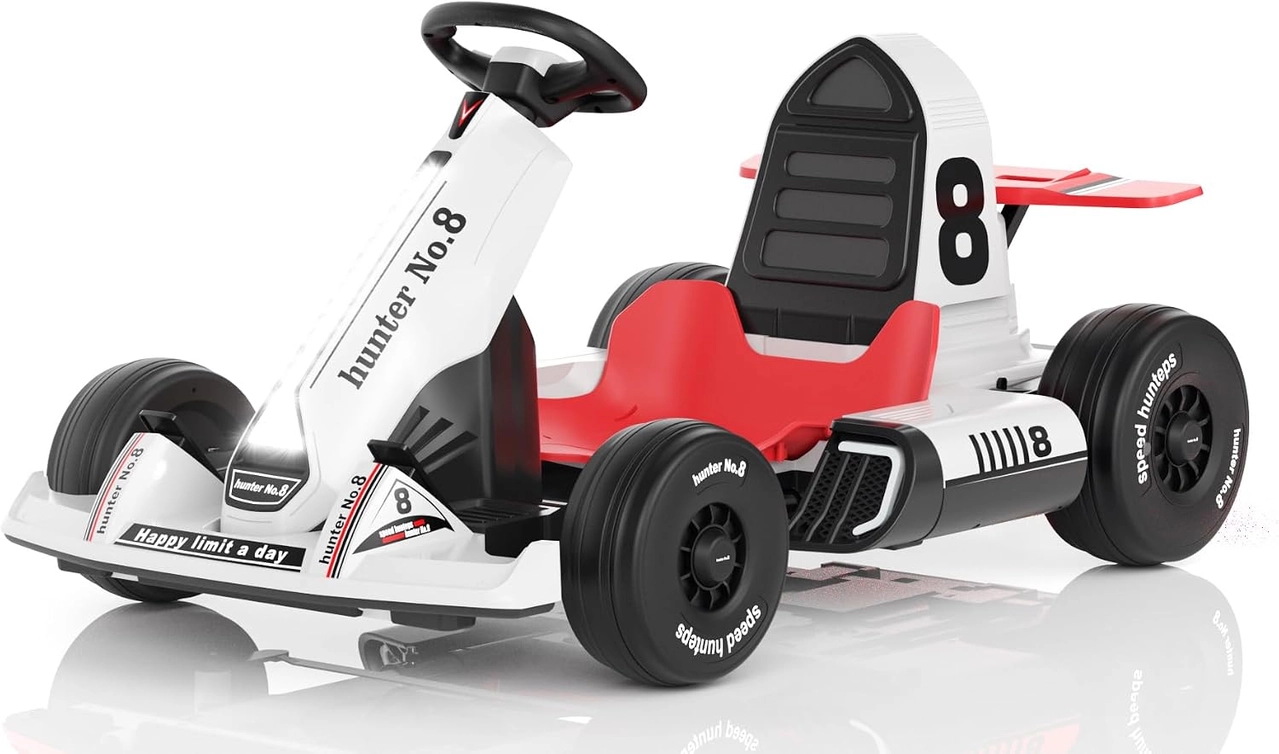
A white 12V XJD go kart can look simple in a product photo, yet families still need to answer practical questions about fit, controls, space and charging. Color is part of the purchase, but it should come after the child can sit securely and the adults can provide a suitable place to drive.
The XJD Electric Go Kart for Kids – White 12V listing describes dual 12V drive power, speed up to 4.97 mph, a 7Ah battery, child and parent control modes, Bluetooth/FM audio, lights, wear-resistant PP+PA wheels, shock absorption and a 10 cm adjustable body. Here is how to translate those features into family decisions.
Start with fit, not the feature list
Seat the child in the powered-off kart after correct assembly. The back should remain supported, the restraint should sit as instructed and the pedal should be reachable with a comfortable bend in the leg. The child should turn the steering without leaning across the seat.
The product listing references ages 37–96 months. Treat that as manufacturer guidance to check, not as a substitute for observing the individual child. Height, leg reach, attention and experience can differ greatly among children of the same age.
Understand the 12V driving tier
The listed maximum of 4.97 mph is product-specific and may vary with surface, rider load and battery condition. It is still fast enough to require a closed route, a clear stopping zone and active adult supervision. Do not compare it with walking pace by eye; measure the space and plan where the kart must stop.
A 12V tier can make sense for a child who understands go and stop controls and can hold a route consistently. It is not automatically a beginner choice for every three-year-old.
Use the two control modes correctly
The listing describes child pedal driving and an included parent remote. The remote can help the adult intervene during early practice, but the child should still be taught to stop independently. Test the remote according to the manual before each learning session and remain physically close.
Establish one clear command language. “Stop” should always mean release the accelerator and perform the taught stopping action. “Wait” should mean remain still until the route is clear.
Put entertainment features in their proper place
Bluetooth, FM audio and the visual display can make play more engaging. Set audio while the kart is stopped, keep volume low enough for the child to hear the supervising adult and avoid asking the child to operate the display while moving.
Headlights and tail lights contribute to the design and visibility, but they do not make the kart suitable for public roads or unsupervised low-light use.
Match the wheels to an approved surface
The product description lists four wear-resistant PP+PA wheels and shock absorption. These features may improve everyday ride feel, but families should still follow the manual's surface guidance. Choose dry, level ground without loose gravel, standing water, steep changes or traffic.
Before each use, check that the wheels move as expected and that nothing is wrapped around them. Stop if steering feels different, a wheel looks damaged or the kart makes a new sound.
Plan charging around adult routines
The listing describes a 12V 7Ah battery and approximately one to two hours of use per full charge. Do not turn that range into a fixed promise; operating conditions affect it. Follow the manual for charging duration and indicators, and use only the supplied charger.
Charge in a dry, uncluttered place while an adult is awake and present. Inspect the cable, plug and battery area. Discontinue use and contact support if there is swelling, leaking, unusual heat, damage or odor.
Care for the white body without harming components
A white finish makes dirt easy to spot, which can encourage regular cleaning. Switch the kart off, use a soft damp cloth and dry it after cleaning. Avoid soaking electrical areas, high-pressure water and harsh solvents. Cleaning time is also a good moment to inspect the seat, restraint and body.
Decide from the whole family setup
The white 12V XJD go kart combines a visible finish with a clearly described 12V feature set. It becomes a sensible family option only when the child fits, the route is controlled, the adult understands both control modes and charging can be supervised. Review those four conditions before deciding whether its features match your home.
Compare the other color options
Compare this white kids go kart with the black 12V kids go kart and red 12V kids go kart. Visit the Kids Go Kart collection, and use the black go kart setup guide and red go kart first-drive plan as related internal resources.


