Red 12V XJD Go Kart: Plan a Confidence-Building First Drive
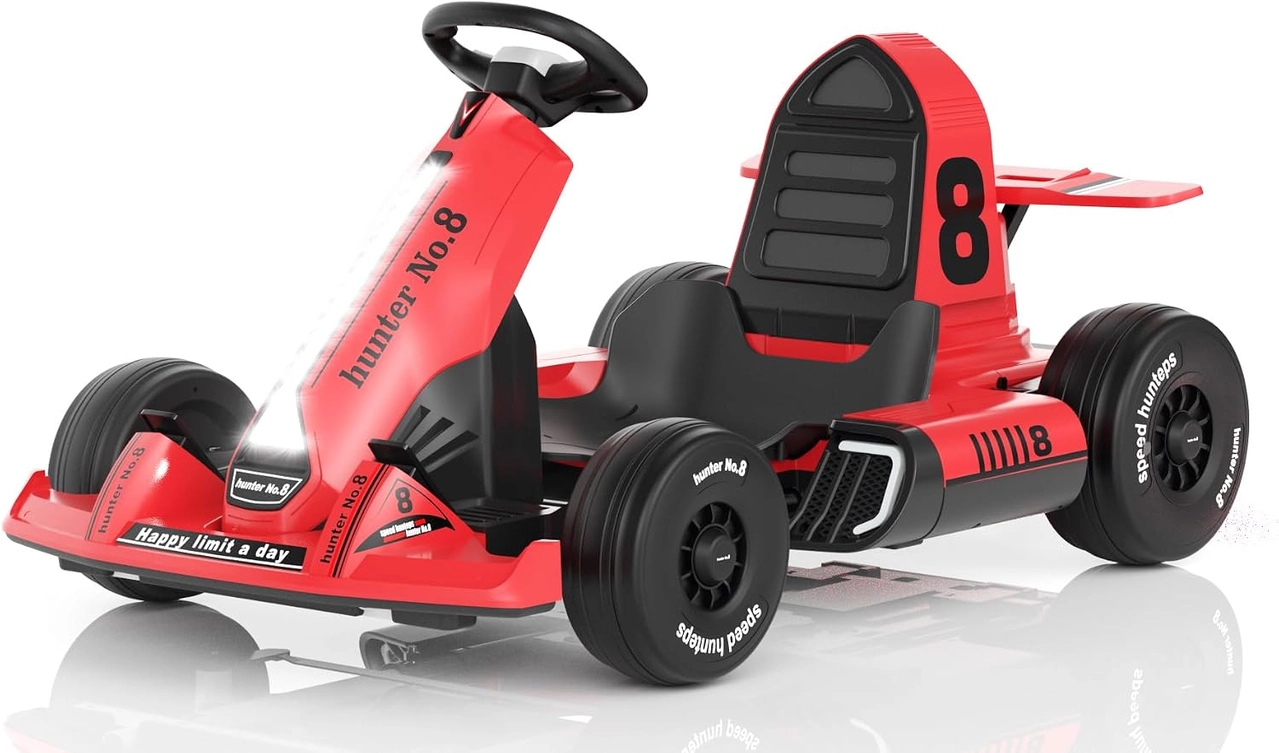
The first drive in a red 12V XJD go kart should feel exciting without becoming chaotic. Bright color and race-inspired styling can make a child eager to start immediately, so parents need a simple lesson plan before the power goes on. The goal is not distance or speed. It is one controlled start, one predictable stop and one child who still wants to listen.
The current XJD Electric Go Kart for Kids – Red 12V listing describes a 12V dual-motor system with a top speed up to 4.97 mph, a 12V 7Ah battery, manual pedal operation, a parent remote, a reinforced belt and a 10 cm body-length adjustment. Use those facts only for this product and confirm every operating step in the manual.
Decide whether today is a good first-drive day
A child should be able to remain seated, reach the controls comfortably and follow immediate stop-and-wait instructions. Excitement is normal, but a child who repeatedly leaves the seat, grabs controls without listening or runs into the route is not ready for powered practice that day.
Check the weather and surface too. Choose daylight, dry ground and a closed area with no vehicle traffic. Avoid a route that points toward a garage door, street, water, stairs or a steep slope.
Make the cockpit fit before teaching controls
With the kart powered off, adjust it only in the positions allowed by the instructions. The rider should sit against the back of the wrap-around seat, stay stable with the restraint used correctly and reach the pedal without locking the knee or sliding forward.
Ask the child to turn the steering through a comfortable range. If shoulders twist or one hand must release to maintain balance, stop and reassess the fit. The listed 37–96 month range is a reference, not proof that every child in that range can operate the kart.
Teach the controls in three quiet steps
- Name: the child points to the start, stop and steering controls while the power is off.
- Show: the adult demonstrates the expected action using the manual and tests the parent remote.
- Repeat: the child explains what to do when the adult says “stop.”
Do not introduce Bluetooth or FM audio during the first lesson. Those listed features can add fun later, but attention should stay on the route and the adult's commands.
Use a straight first lap
Mark a short lane with a stopping line well before the boundary. Let the kart move straight, then ask the child to stop. Reset and repeat. The adult should walk beside or close behind at a position that does not block the child's view.
If the kart crosses the line, find out why before continuing. The child may have pressed the wrong control, reacted late or been unable to reach comfortably. A remote stop can end the movement, but the child still needs to learn independent stopping.
Add one wide turn
After several calm stops, place one large marker and teach the child to look through the turn. Avoid tight cones that encourage abrupt steering. Use a broad arc and return to the original stopping line.
Pause when the rider stares at the pedal, steers back and forth rapidly or forgets the boundary. These are signals to simplify the lesson, not reasons to increase practice speed.
Finish before concentration disappears
A short successful session is more useful than a long session that ends in frustration. Stop after a few consistent laps, after any collision or unusual sound, or when the child becomes tired. Power off before anyone reaches near wheels or controls.
Review together after the drive
Ask three questions: What helped you stop? Where did you look during the turn? What will you do when an adult says wait? This turns play into a repeatable skill without making the experience feel like a test.
Inspect the pedal area, wheels, seat and visible fasteners after use. Store the kart dry and charge only according to the supplied instructions with an adult present.
Confidence comes from predictable practice
The red 12V XJD go kart provides the product features; the family creates the learning environment. A good first drive uses a fitted seat, a closed route, clear commands and patient repetition. When the child can start, steer and stop without rushing, confidence grows from real control rather than from speed alone.
Compare the other color options
Compare this red kids go kart with the black 12V kids go kart and white 12V kids go kart. Browse the full Kids Go Kart collection, then read the black go kart setup guide and white go kart fit guide.


