Kids Go Kart One Wheel Not Spinning: What to Check
When a kids go kart one wheel not spinning is noticed, first determine whether that wheel is driven on the exact model. Some ride-ons power one wheel, while others use two motors or a differential-like arrangement. A stationary wheel can also result from debris, damaged retention, a loose connector, or a gearbox fault. Switch off and do not test with hands nearby.
Confirm the model's drive layout
Use the current product page, parts diagram, and manual to identify which wheels receive motor power and how they should behave while turning. Do not assume two rear wheels must rotate equally when unloaded. Record whether the symptom appears going straight, turning, forward, or reverse. Comparing with a different voltage version can lead to a false diagnosis.
Inspect wheel and ground contact
Park on dry level ground and remove the child. With power isolated as instructed, look for string, stones, packed grass, body contact, a displaced hub cap, or visible tire damage. Do not lift a powered kart and press the pedal. If manual rotation is prohibited or the wheel resists, stop rather than forcing gears through the motor.
Check visible retention hardware
Compare nuts, washers, clips, and wheel position with the exact assembly diagram. A loose wheel may spin without transferring drive, while over-tightened or misassembled parts can bind. Do not add washers, substitute a common nut, or apply adhesive. Missing locking hardware, axle movement, cracked plastic, or bent components require compatible service.
Look for an electrical pattern
On a dual-motor kart, note whether one side makes sound, twitches, gets warm, or fails in both directions. With power off, inspect only external motor connectors listed for owner access. Seat them as specified without pulling wires. Melted insulation, corrosion, odor, repeated breaker trips, or a motor or gearbox noise requires support, not repeated pedal tests.
Verify steering and stopping afterward
Once the diagnosed part is repaired, an adult checks wheel security, tire condition, steering, pedal return, and braking. Use the lowest speed on an enclosed level surface and observe straight tracking and wide turns. Pulling, clicking, heat, intermittent drive, or renewed one-sided behavior ends the test before a child rides.
How current product examples clarify the choice
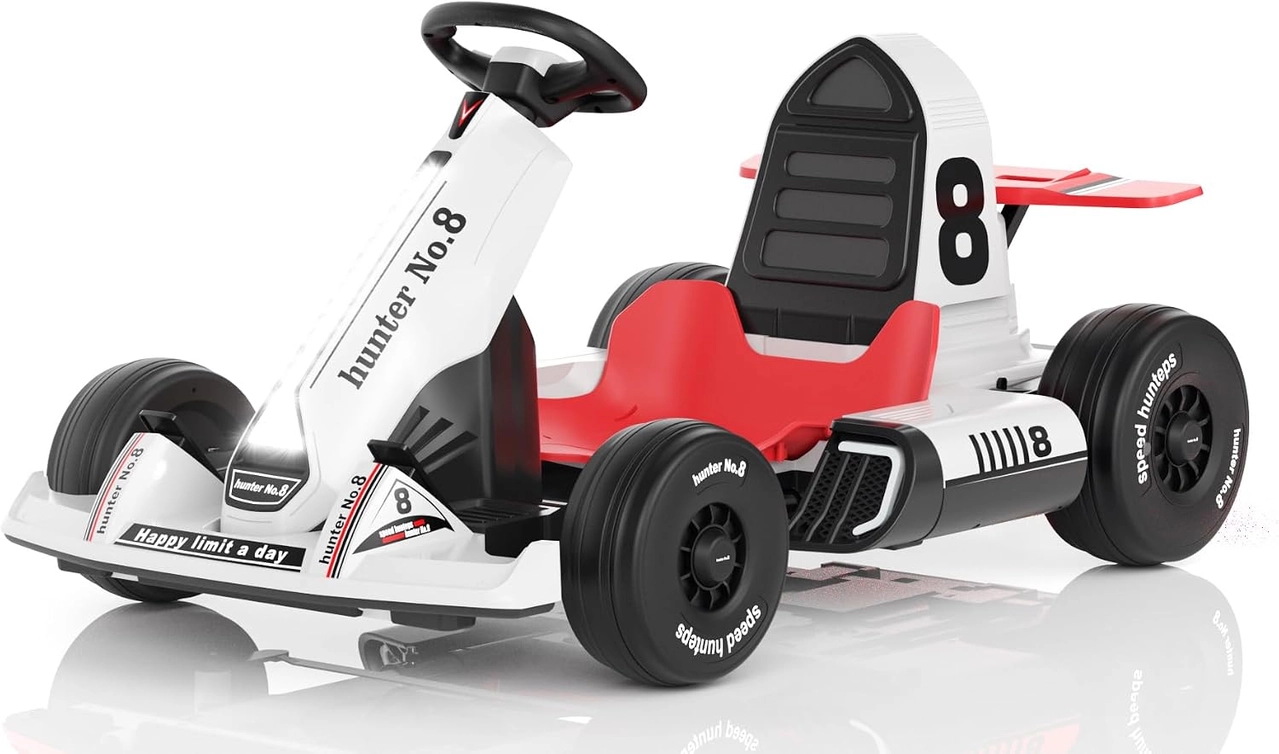
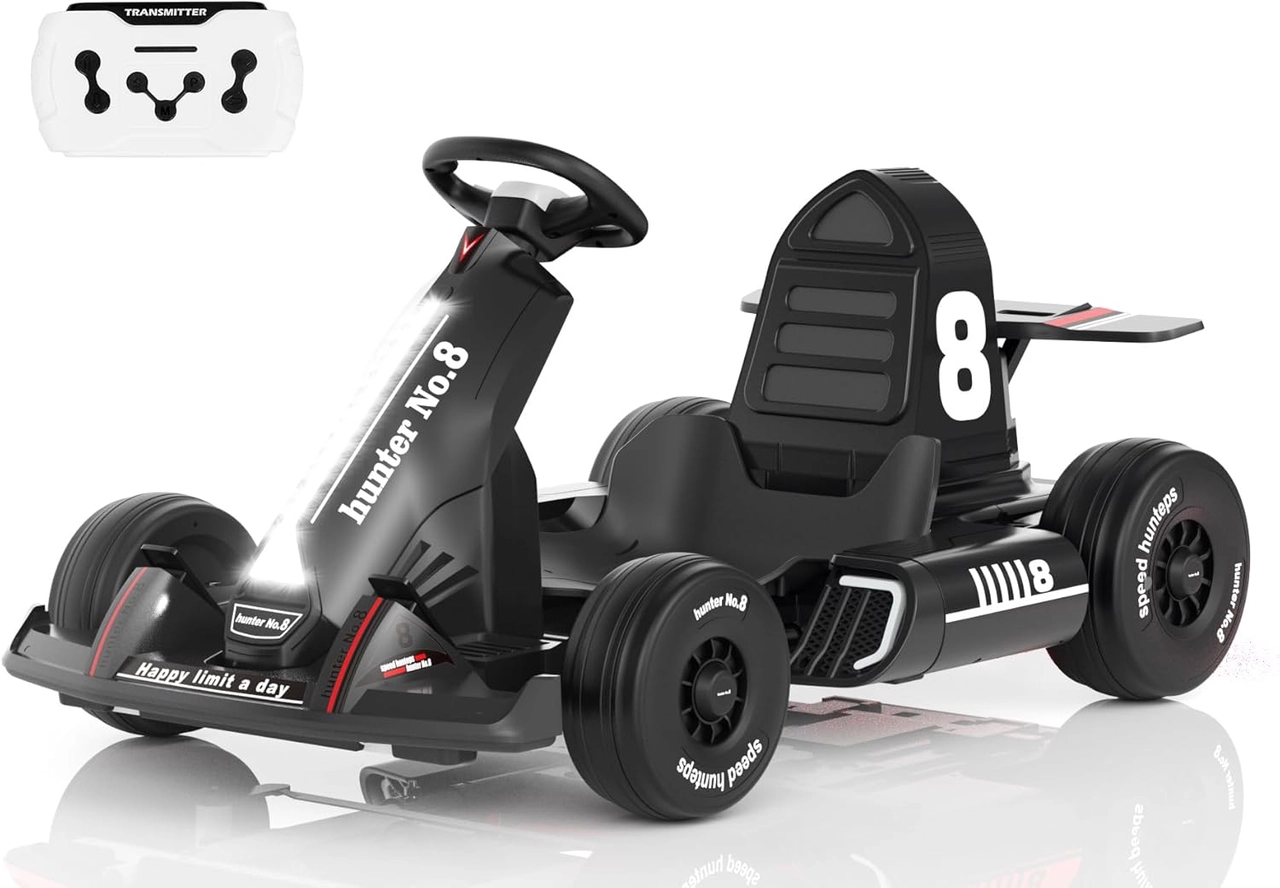
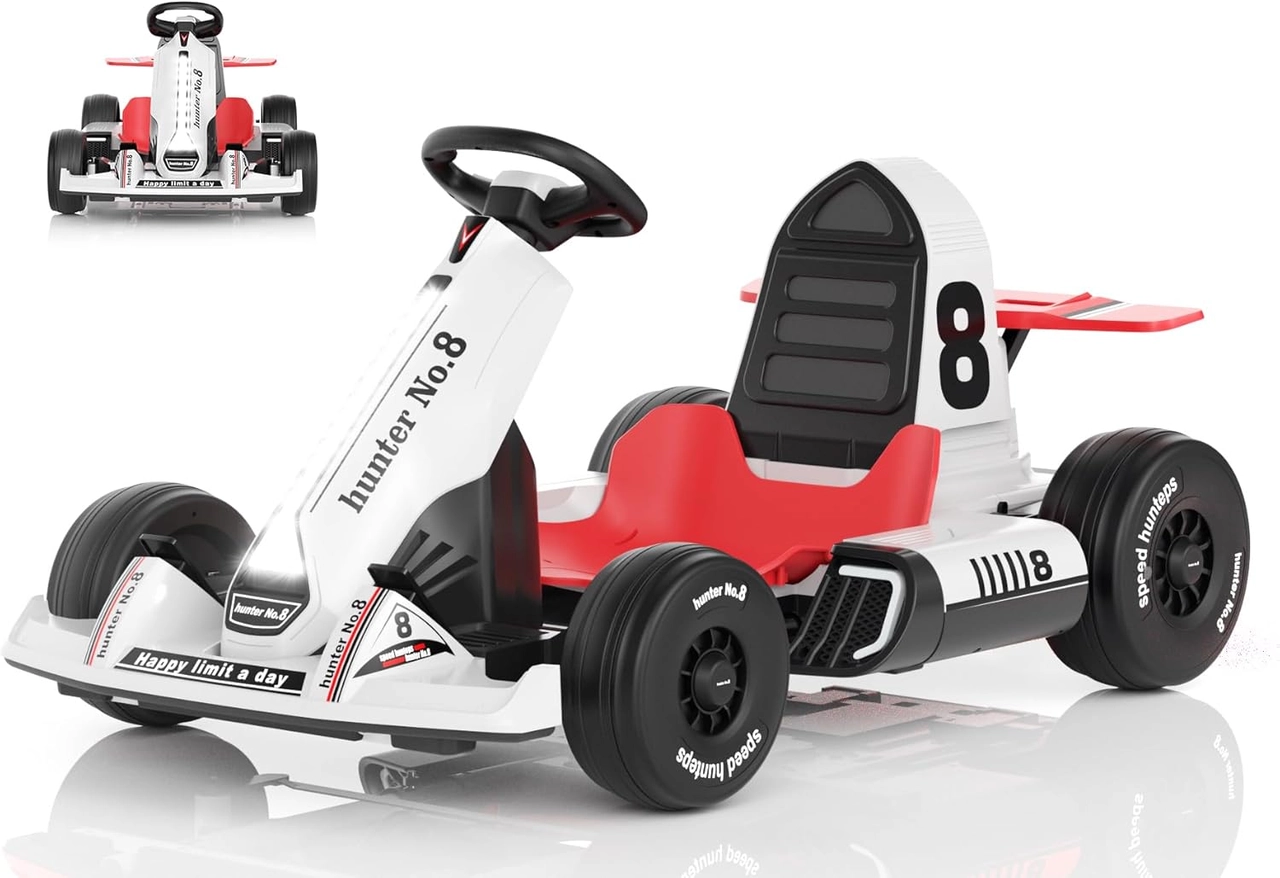
The XJD White 12V, XJD Black 24V, and XJD White 24V Kids Go Karts provide visual comparisons across electrical tiers. Similar wheel styling does not establish motor count, axle parts, or gearbox compatibility. The exact selected model's drive diagram determines whether the observation is expected and which components may be serviced.
Related reading on this site
For the next step, compare this check with our kids go kart overview and electric go kart maintenance guide. These pages provide nearby fit, component, or maintenance context without replacing the exact product manual.
Practical checklist
- Identify which wheels are driven.
- Switch off before close inspection.
- Keep original locking hardware.
- Stop for heat, odor, or gearbox noise.
Frequently asked questions
Should both rear go kart wheels spin at the same speed?
Not necessarily; drive design and turning geometry differ, so check the exact model specification.
Can I tighten a wheel until it starts driving?
No. Incorrect tightening can bind or damage parts; follow the documented hardware order and torque.
Before making the final choice, revisit the exact route or driving area at the time it will normally be used. A setup that works during a quiet test may need more room, visibility or adult support when other people and everyday obstacles are present.
Bottom line
Use the answer to kids go kart one wheel not spinning as a decision process, not a shortcut. Confirm the live product data and manual, match the rider to the controls and setting, and favor repeatable control over a larger size or higher performance label.


