Kids Go Kart Brake Pedal Stuck: Stop-Use Guide
A kids go kart brake pedal stuck down, slow to return, or unable to travel normally can prevent predictable stopping or keep the brake engaged. Remove the child and switch off the kart. Different karts stop by releasing the accelerator, by a separate pedal, or through combined electronic and mechanical systems, so first verify what the visible pedal controls.
Respond safely to a moving kart
If the fault occurs in motion, release acceleration, use the normal brake or power-off control as the manual directs, and steer into a clear open stopping zone. An adult should not reach beside moving wheels. Once stationary, remove the key if fitted and prevent another start. Do not ask the child to recreate the symptom.
Clear only accessible obstructions
With power isolated, inspect around the pedal for stones, mud, toys, loose floor material, shoe laces, or a body panel rubbing. Remove only loose debris reachable without opening guards. Gently operate the empty pedal if permitted and observe whether it scrapes, tilts, or fails to spring back. Never oil an unknown sensor or linkage.
Inspect linkage and recent damage
Compare the pedal, pivot, spring, cable, rod, and accessible switch with the parts diagram. Look for a bent bracket, cracked plastic, missing retainer, corrosion, or a pinched wire. Record whether the problem followed a collision, washing, transport, or assembly. Do not bend a pedal arm, stretch a spring, or substitute a pin.
Separate braking from electrical faults
A mechanical brake that remains applied can create heat and slow movement, while an electronic control can fail without obvious physical binding. Do not open a controller, short a switch, defeat an interlock, or lift the powered kart for diagnosis. Burn marks, odor, repeated protection trips, or inconsistent drive and stop response need qualified service.
Use a cautious repair test
After authorized service, an adult confirms full travel and immediate return with power off, then checks steering and accelerator return. Test at the lowest setting in a dry enclosed area with generous stopping room and no child if permitted. The kart must start and stop repeatedly without drag, delay, heat, or renewed sticking before supervised use.
How current product examples clarify the choice
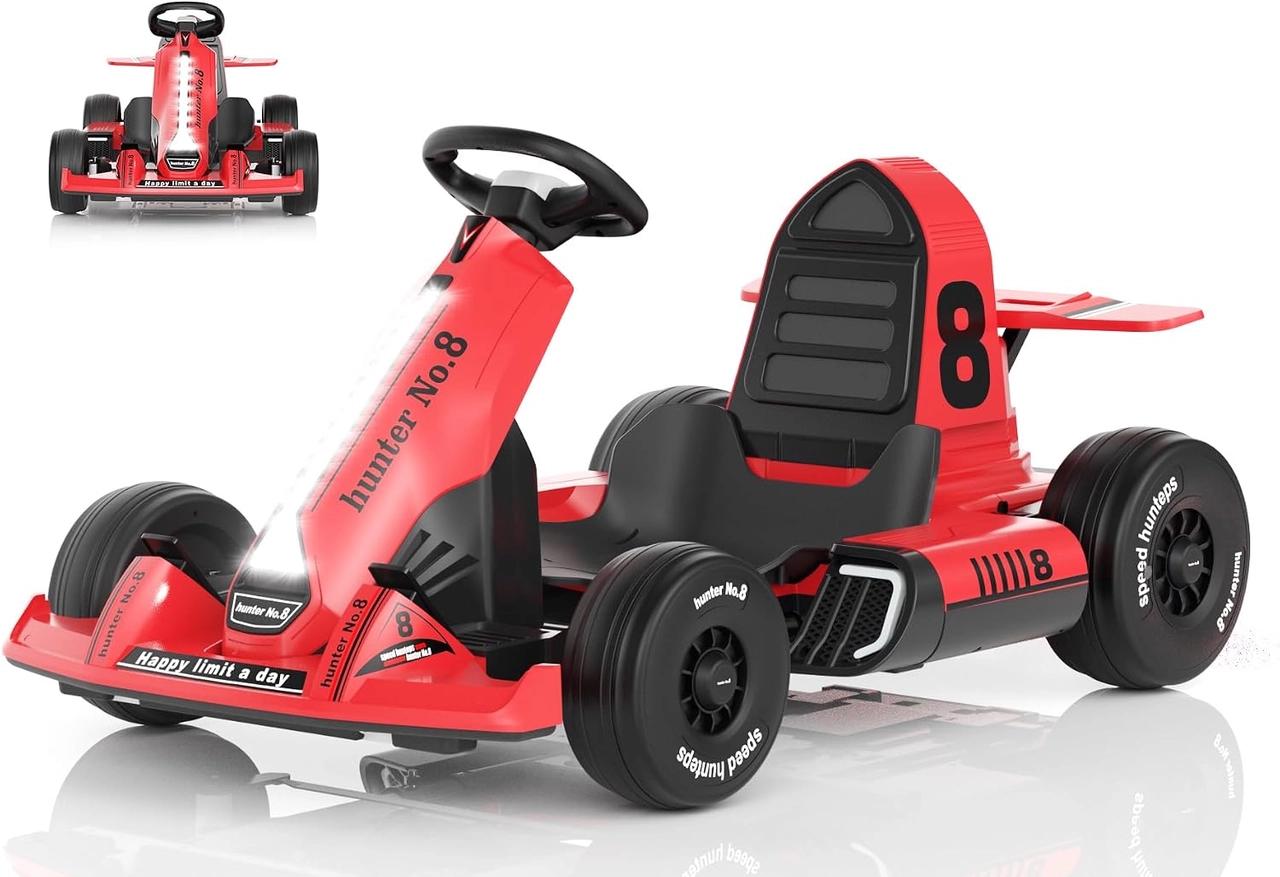
The XJD Red 24V Kids Go Kart offers a higher-speed tier with parent and manual modes, so consistent pedal and stopping behavior deserve special attention. Its actual stopping system and control layout—not the 24V label alone—must determine inspection and service. Never apply instructions from a kart whose pedal has a different function.
Related reading on this site
For the next step, compare this check with our kids go kart safety checklist and 24V go kart guide. These pages provide nearby fit, component, or maintenance context without replacing the exact product manual.
Practical checklist
- Stop power once safely stationary.
- Remove debris only while powered off.
- Never bend or lubricate unknown controls.
- Test repeatedly at the lowest setting.
Frequently asked questions
Can mud make a go kart pedal stick?
It can obstruct movement, but damaged pivots, springs, switches, and controls must also be ruled out.
Can a child ride if the brake pedal returns slowly?
No. Any delayed or inconsistent return needs repair and adult verification first.
Before making the final choice, revisit the exact route or driving area at the time it will normally be used. A setup that works during a quiet test may need more room, visibility or adult support when other people and everyday obstacles are present.
Bottom line
Use the answer to kids go kart brake pedal stuck as a decision process, not a shortcut. Confirm the live product data and manual, match the rider to the controls and setting, and favor repeatable control over a larger size or higher performance label.


