Kids Go Kart Riding Rules and Precautions Every Parent Should Enforce
So you have decided a kids go kart is the right gift — maybe the crisp white go kart your child has been pointing at for months. The kart arrives, the battery charges, and the real work begins: setting the rules that keep the fun safe. Most go kart injuries are predictable and preventable, and nearly all of them trace back to a missing helmet, an unsafe surface, or an unsupervised moment.
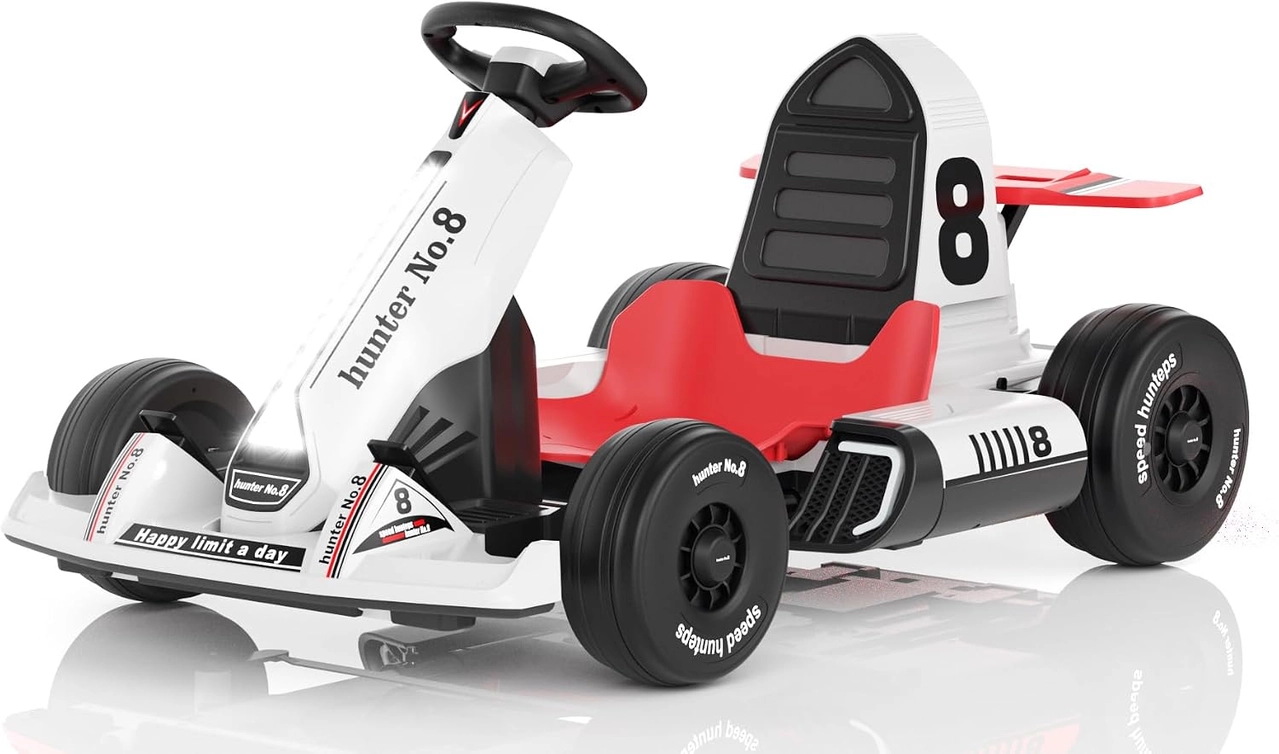
This guide walks through the precautions that matter at every stage: before the first ride, while the kart is moving, and after it comes back to the garage. It pairs with our pre-ride Kids Go Kart Safety Checklist, which covers the two-minute equipment inspection in detail.
Before the First Ride: Set the Ground Rules
Safety starts with a family conversation, not a lecture. Sit down with your child and agree on the rules together, then post them where the kart is stored. The rules that protect best are few, clear and non-negotiable:
- No helmet, no ride. The kart does not turn on until a properly fitted helmet is buckled. No exceptions, not even for "one quick lap."
- The course has boundaries. Mark where driving starts and ends — cones, chalk lines or garden hoses all work.
- Stop means stop. One word, agreed in advance, that halts the kart instantly for any reason.
- One driver at a time. Passengers are never allowed on a single-seat kart.
Children follow rules they helped write. When your child suggests a boundary or a stop signal, adopt it — ownership is the cheapest safety feature you will ever install.
Choose the Right Surface and Location
Where the kart rides matters more than how fast it goes. Acceptable surfaces are flat, dry and free of traffic:
- Driveways gated away from the street
- Level backyard lawns with no slope
- Empty basketball or tennis courts
- Private paths with no vehicle access
Never allow go kart riding on public streets, sidewalks shared with pedestrians, parking lots with moving cars, or near swimming pools, ditches and stairs. Even at walking speed, a distracted moment near traffic can change a life. Slopes deserve special respect: most kids' karts, including the white 12V XJD go kart, are designed for level ground, and gravity does not care what the box said.
Helmet and Gear: The Non-Negotiables
A helmet is the single most effective piece of safety equipment, and it only works when it fits. The helmet should sit level, cover the forehead, and stay put when the child shakes their head. A loose helmet slides exactly where it is needed most and misses. Pair it with closed-toe shoes — sneakers, never sandals or Crocs — and avoid drawstrings, scarves or loose clothing that can catch on controls.
For younger riders on 6V models, knee and elbow pads add confidence as well as protection. They are a good idea for any first-season driver; see our 6V go kart guide for age-appropriate setup.
Match Speed and Voltage to the Rider
Power should follow skill, not birthdays. A first-time driver does not belong in a 24V kart any more than a new cyclist belongs on a mountain descent. The general progression in our lineup:
- 6V models — first drivers, roughly ages 3 to 6, gentle speeds on grass or pavement
- 12V models — ages 6 to 9, dual-drive motors, faster but still supervisable
- 24V models — confident riders, older and taller, with real space to stop
If your child hesitates at corners, brakes late or freezes when told to stop, drop back a tier. Readiness is about demonstrated control, not age alone.
Active Supervision: The Adult's Job Description
Supervision does not mean watching from the porch with a coffee. An adult should be within quick reach of young drivers — able to intervene physically within seconds. That means:
- Eyes on the kart whenever it is moving, not on a phone
- Standing where you can reach the kill switch or remote (on models equipped with parent remote, like the XJD line)
- Scanning the course ahead for pets, siblings and balls that roll in
- Ending the session the moment focus fades — tired kids take risks
Fifteen to twenty minutes is a solid first session. Cut it short happily; tomorrow's ride is the reward for stopping while it is still fun.
Traffic Rules Kids Can Learn From
A backyard kart course is the best driver's education a child will get before a bicycle. Teach the rules of the road early:
- Drive the agreed direction — no sudden U-turns mid-course
- Yield to anyone on foot; the kart waits
- Check behind before reversing, every time
- Speed drops near corners, pedestrians and the course edge
These habits transfer directly to bikes and, years later, to cars. A child who learned "stop means stop" in a white kart at age five is a safer cyclist at eight and a calmer driver at sixteen.
Battery, Charging and Electrical Precautions
The battery that powers the fun deserves adult respect. The U.S. Consumer Product Safety Commission advises adults to be present while charging battery-powered ride-ons, to use only the supplied charger, and to charge in a dry area on a non-flammable surface. Make charging an adult task, end to end:
- Charge only with the original charger, in a dry, ventilated spot
- Never charge overnight or while the household sleeps
- Inspect the connector and cable for damage before each charge
- Unplug when charging completes; do not store the kart plugged in
- Keep the charger and battery compartment away from water and rain
Teach your child that the charging port is off-limits, the same way outlets in the house are. Curiosity plus electricity is a combination to manage early.
Weather and Visibility Limits
Karts are fair-weather machines. Do not ride in rain, on wet pavement, or when dew makes grass slippery — traction and braking both suffer, and water near electrical components is never worth the risk. In bright summer sun, a white body like the XJD white go kart's stays cooler to the touch than dark finishes, but riders still need breaks, water and shade. As dusk approaches, stop: even with working lights, depth perception fades long before a child notices it.
Caring for a White Go Kart Teaches Safe Habits
There is a hidden advantage to the white finish: it shows everything. Grass stains, dust, oil spots and hairline cracks announce themselves against a white shell, which turns routine cleaning into routine inspection. After each session, have your child help wipe the kart down and look for:
- Loose bolts or wobbly wheels
- Cracks in the body or seat
- Frayed cables or a bent charger connector
- Debris packed around the axles or pedals
A two-minute wipe-down catches problems while they are still cheap to fix. Our white go kart cleaning guide covers the details, and the maintenance habits transfer to every bike and scooter your child will ever own.
Storage and Hand-Me-Down Rules
Store the kart indoors, dry and out of direct sunlight, with the battery disconnected per the manual. When a younger sibling inherits it, re-run the whole safety setup: new helmet fitting, new ground rules, lower speed tier if available, and a full bolt-and-battery inspection. A kart that was safe for a nine-year-old is not automatically safe for a four-year-old.
When a Rule Gets Broken
Expect testing; it is how children learn boundaries. When a rule is broken, the session ends calmly — no yelling, no debate, the kart goes away for the day. Consistency is what teaches. The child who learns that "no helmet, no ride" survived their best friend's visit on a Saturday will believe every safety rule you ever set.
The Bottom Line
Go kart precautions are not about wrapping childhood in bubble wrap. They are the framework that lets a child race a gleaming white kart around the backyard for years, building skill and confidence without a preventable injury. Enforce the helmet, choose the surface, match the voltage, stay in reach, and let the rules do the quiet work. Start with our White Go Kart collection, post the rules by the garage door, and enjoy every safe lap.


