Why Is My Kids Go Kart Hard to Steer? A Parent's Checklist
Why is my kids go kart hard to steer? First decide whether the steering has always felt heavy or changed after assembly, impact, transport or storage. Fit, surface friction, debris, incorrect assembly or bent and binding parts can all affect steering. A child should never be asked to overpower a control that an adult already finds abnormal.
Test fit with the power off
Seat the child only for a stationary fit check while an adult stabilizes the kart. The rider should reach the wheel without locked elbows or sliding forward and reach the pedals while the belt sits as instructed. An incorrect seating position can look like weak steering even when the linkage moves normally.
Move to a firm, level surface
Soft grass, deep carpet, gravel and a parked position against a curb can add tire resistance. Use only a surface approved by the manual. With the child out and power off, compare steering feel on clear level ground. Never use a slope or powered acceleration to force the front wheels to turn.
Inspect for visible obstruction
Look around the front wheels and steering path for grass, stones, cords, packaging and bodywork contact. Remove only loose debris that is safely accessible. Watch the linkage through a slow hand movement if the manual allows it, keeping fingers away from pinch points. A scrape, stop or uneven movement is evidence to stop.
Compare assembly and alignment
Use the exact diagrams to confirm steering wheel, column, rods, front axle pieces, washers and fasteners are in their intended positions. Do not copy another model or bend a rod straight. Unequal front-wheel direction, cracks, bent metal or a change after impact requires qualified assessment.
Return to service gradually
After an authorized correction, an adult checks full left and right movement with no child, then performs a low-speed start and stop in a clear area. The first child session should use the lowest suitable setting and wide turns. Stop again if effort changes, the kart pulls to one side or clicking returns.
How current product examples clarify the choice
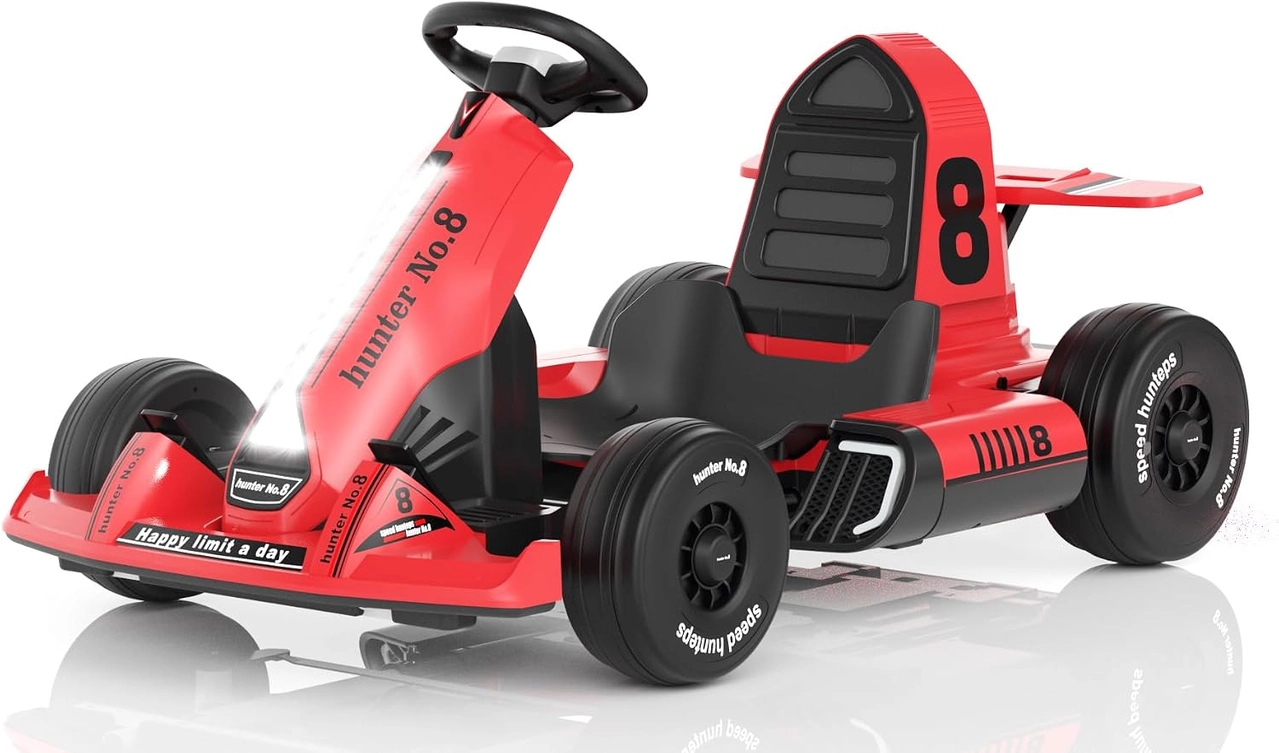
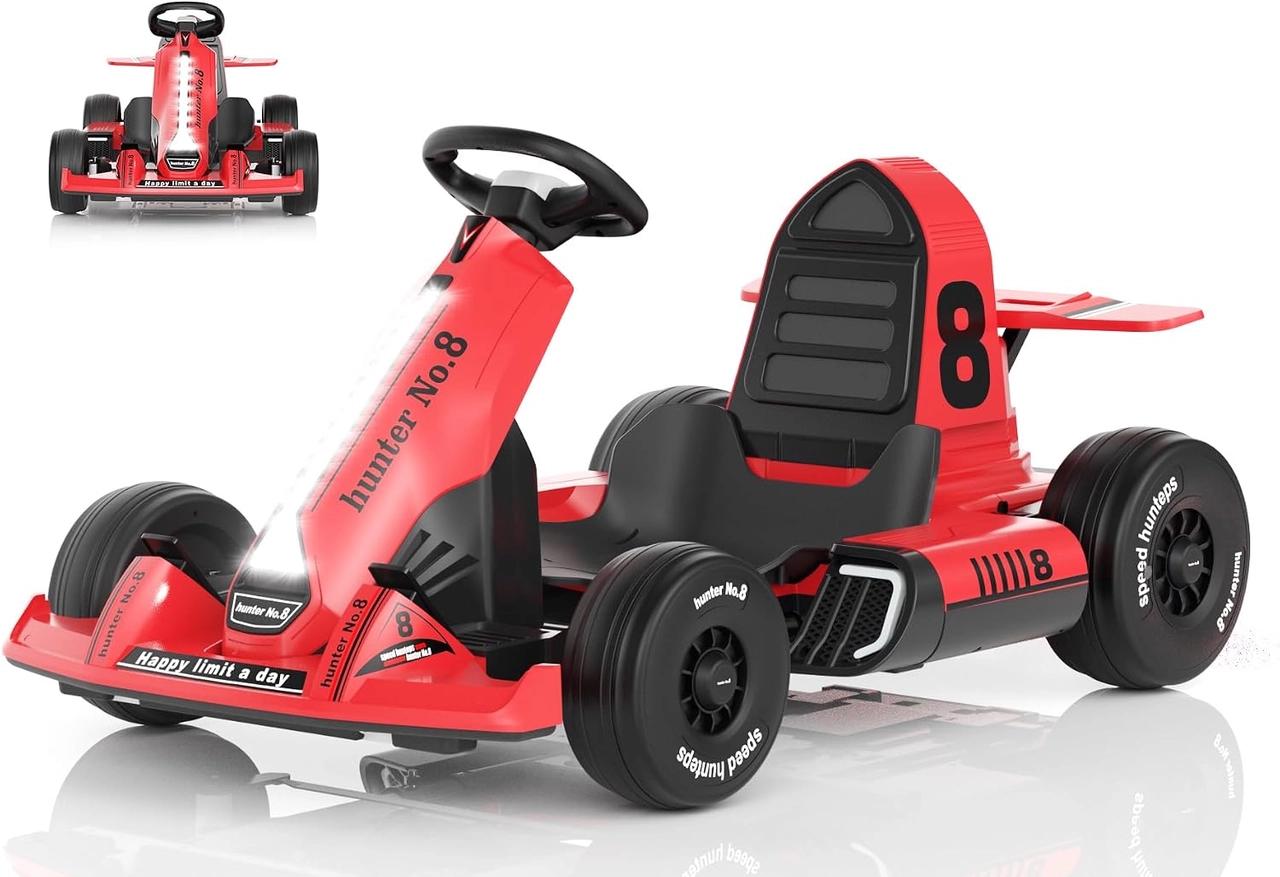
The XJD Red 12V Kids Go Kart and XJD Red 24V Kids Go Kart share an adjustable-length cockpit and similar parent/manual control layout, but they are separate voltage products with different performance. Their common appearance is a reminder to use the correct model's assembly and steering instructions rather than assuming every visible part interchanges.
Practical checklist
- Check reach before powered driving.
- Use firm, approved level ground.
- Remove only safely accessible debris.
- Do not bend or force steering parts.
Frequently asked questions
Will more speed make a stiff kart turn more easily?
No. A steering fault must be resolved with the power off before any driving test.
Can I lubricate the steering linkage?
Only where and with what the exact manual specifies; stray lubricant can reach electrical, tire or braking surfaces.
Before making the final choice, revisit the exact route or driving area at the time it will normally be used. A setup that works during a quiet test may need more room, visibility or adult support when other people and everyday obstacles are present.
Bottom line
Use the answer to why is my kids go kart hard to steer as a decision process, not a shortcut. Confirm the live product data and manual, match the rider to the controls and setting, and favor repeatable control over a larger size or higher performance label.


