Why Is My Kids Electric Go Kart So Slow? A Troubleshooting Guide
Why is my kids electric go kart so slow? Begin by deciding whether the speed is normal for the selected mode or has changed from previous rides. A low-speed setting, partial charge, soft surface, slope, heavy load or cold conditions can all affect performance. Treat sudden or repeated slowing as a reason to stop and inspect, not a reason to modify the kart.
Confirm the selected mode
With the kart stopped and the child out, compare the speed selector, manual or remote mode and startup sequence with the exact instructions. Some controls intentionally limit speed for beginners. Do not defeat a low-speed setting or assume the remote and manual modes use identical limits. Record which indicators appear before changing anything.
Check the approved charging routine
Use only the supplied or manufacturer-approved charger for the exact voltage. Confirm the previous charge followed the stated time and indicator sequence. Inspect the external plug, cord and charging port for looseness, damage, heat or odor without opening the case. A damaged battery or connector belongs with qualified support.
Compare surface, slope and load
Test only on a manual-approved firm, level area with the normal rider and no cargo. Thick grass, sand, gravel, a slope or excess load can make the motors work harder and may trigger protection. Do not repeat a severe route as a test. If normal speed returns on approved level ground, change the route rather than the electrical system.
Inspect visible wheel resistance
Turn the power off and follow the manual before touching the wheels. Look for grass, cord or debris that can be removed safely, a wheel touching bodywork or obvious assembly movement. Do not place hands near a powered drivetrain, add random lubricant or loosen steering and axle hardware without a specified procedure.
Document a repeatable symptom
Note charge date, selected mode, surface, rider load, approximate runtime and whether lights or audio remain normal. Stop for clicking, grinding, repeated cutouts, unusual heat or burning smell. Clear observations help support distinguish a battery, wiring, controller, motor or mechanical issue without unsafe guesswork.
How current product examples clarify the choice
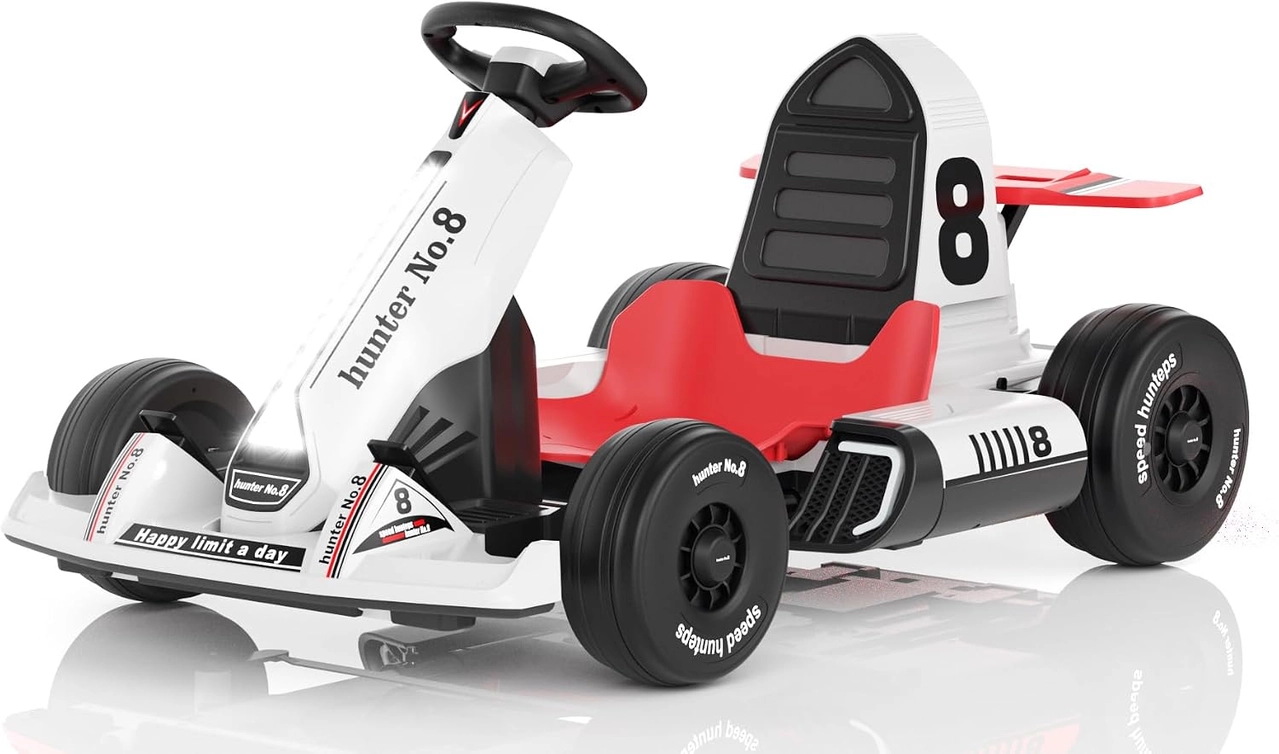
The XJD White 12V Kids Go Kart uses a 12V 7Ah battery, lists up to 4.97 mph and offers parent remote and manual modes. Those live specifications establish a useful baseline: compare the kart with its own normal behavior and selected mode, not with a different 24V product or an online speed claim.
Practical checklist
- Confirm the normal speed mode.
- Use the exact approved charger.
- Retest only on approved level ground.
- Record symptoms before contacting support.
Frequently asked questions
Should I install a higher-voltage battery to make it faster?
No. Voltage changes can damage the system and create fire or control hazards.
Is a short runtime always a bad battery?
No. Surface, load, temperature and driving style matter, but repeated decline under comparable conditions needs support.
Before making the final choice, revisit the exact route or driving area at the time it will normally be used. A setup that works during a quiet test may need more room, visibility or adult support when other people and everyday obstacles are present.
Bottom line
Use the answer to why is my kids electric go kart so slow as a decision process, not a shortcut. Confirm the live product data and manual, match the rider to the controls and setting, and favor repeatable control over a larger size or higher performance label.


