Kids Go Kart Horn Not Working: Simple Checks
A kids go kart horn not working can come from a low battery, a sound control set incorrectly, a steering-wheel connector left unplugged after assembly, or a failed switch or speaker. The horn is not a substitute for adult supervision, but a new electrical symptom can reveal a connection problem. Switch off before inspecting any connector or steering component.
Confirm the intended horn control
Use the exact operating diagram to identify the horn button rather than assuming every steering-wheel icon has the same function. Note whether other sounds, lights, or controls work and whether the horn responds only in one mode. Do not repeatedly press a stuck button or let the child test while an adult reaches around the steering column.
Check battery state and startup mode
Charge with the approved charger and sequence, then verify the kart is in the required powered state. A display or light can operate while available battery voltage is too low for every accessory. Record whether sound fades, crackles, or returns after a full charge. Do not substitute a higher-voltage supply to test the speaker.
Review steering-wheel assembly
Some ride-ons have a small sound or control connector routed through or beneath the steering wheel during assembly. With all power off, compare only accessible plugs with the instructions and confirm they are seated, dry, and undamaged. Avoid pulling wires, pinching them under a fastener, or removing a wheel or column cover not listed for owner access.
Look for a wider electrical pattern
If lights, remote functions, or drive controls also fail, the problem may not be isolated to the horn. Check visible wiring for abrasion, corrosion, melted insulation, and loose connectors as allowed. Burning odor, heat, moisture entry, intermittent drive behavior, or a protection device that trips is a stop-use issue for qualified service.
Retest without relying on the horn
After approved service, an adult confirms sound at a reasonable level and checks steering, pedals, brakes, lights, and remote functions separately. The child still needs a clear private riding zone without pedestrians in the route. Teach a full stop rather than expecting the horn to make another person or pet move out of the way.
How current product examples clarify the choice
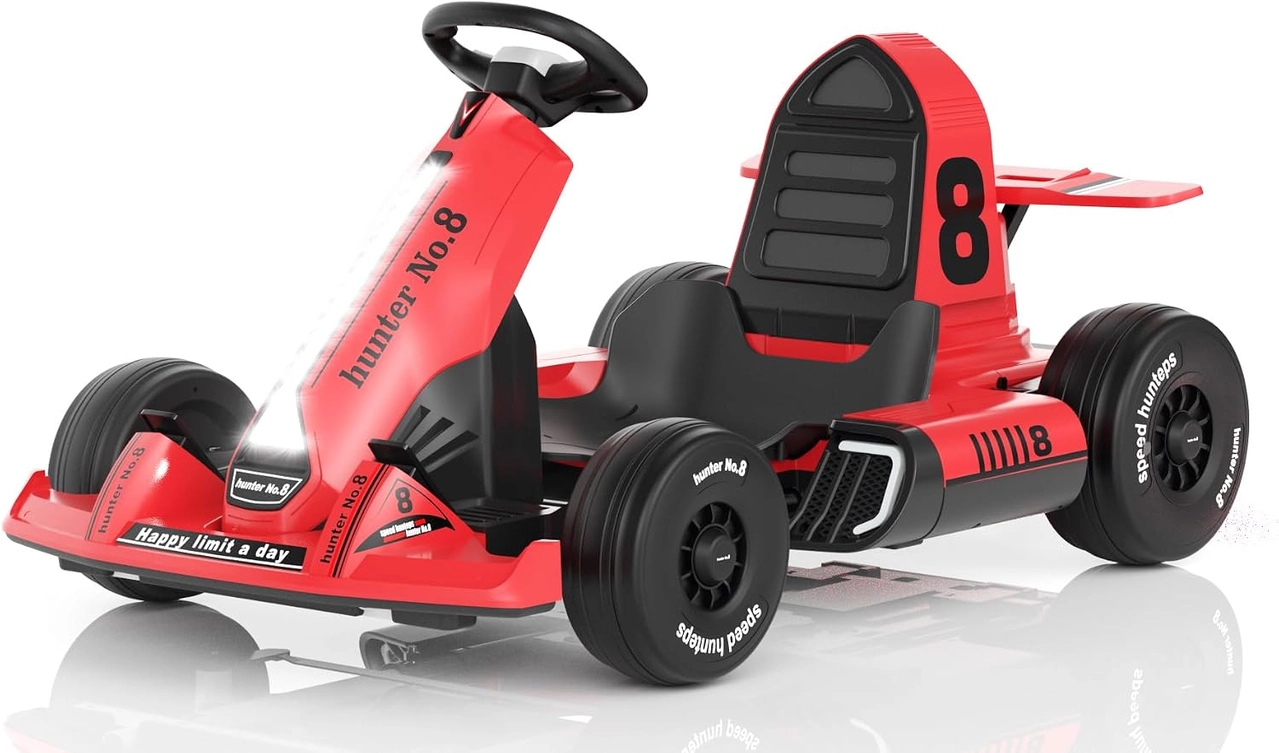
The XJD Red 12V Kids Go Kart includes steering-wheel controls alongside parent and manual driving modes. It provides relevant product context for checking which button and connector belong to the sound system. Its exact harness and parts must still be confirmed from the current manual rather than inferred from another similar-looking kart.
Practical checklist
- Identify the correct sound button.
- Switch off before checking plugs.
- Note whether other electrical features fail.
- Never treat the horn as a stopping system.
Frequently asked questions
Will a low go kart battery stop only the horn?
It can affect accessories, but isolated switch, connector, or speaker faults are also possible; compare other functions systematically.
Can a child keep riding if the horn is broken?
First determine whether it is an isolated issue and whether the manual requires it; any broader electrical fault must be resolved.
Before making the final choice, revisit the exact route or driving area at the time it will normally be used. A setup that works during a quiet test may need more room, visibility or adult support when other people and everyday obstacles are present.
Bottom line
Use the answer to kids go kart horn not working as a decision process, not a shortcut. Confirm the live product data and manual, match the rider to the controls and setting, and favor repeatable control over a larger size or higher performance label.


