Red 24V XJD Go Kart: A Structured Practice Plan for Growing Drivers
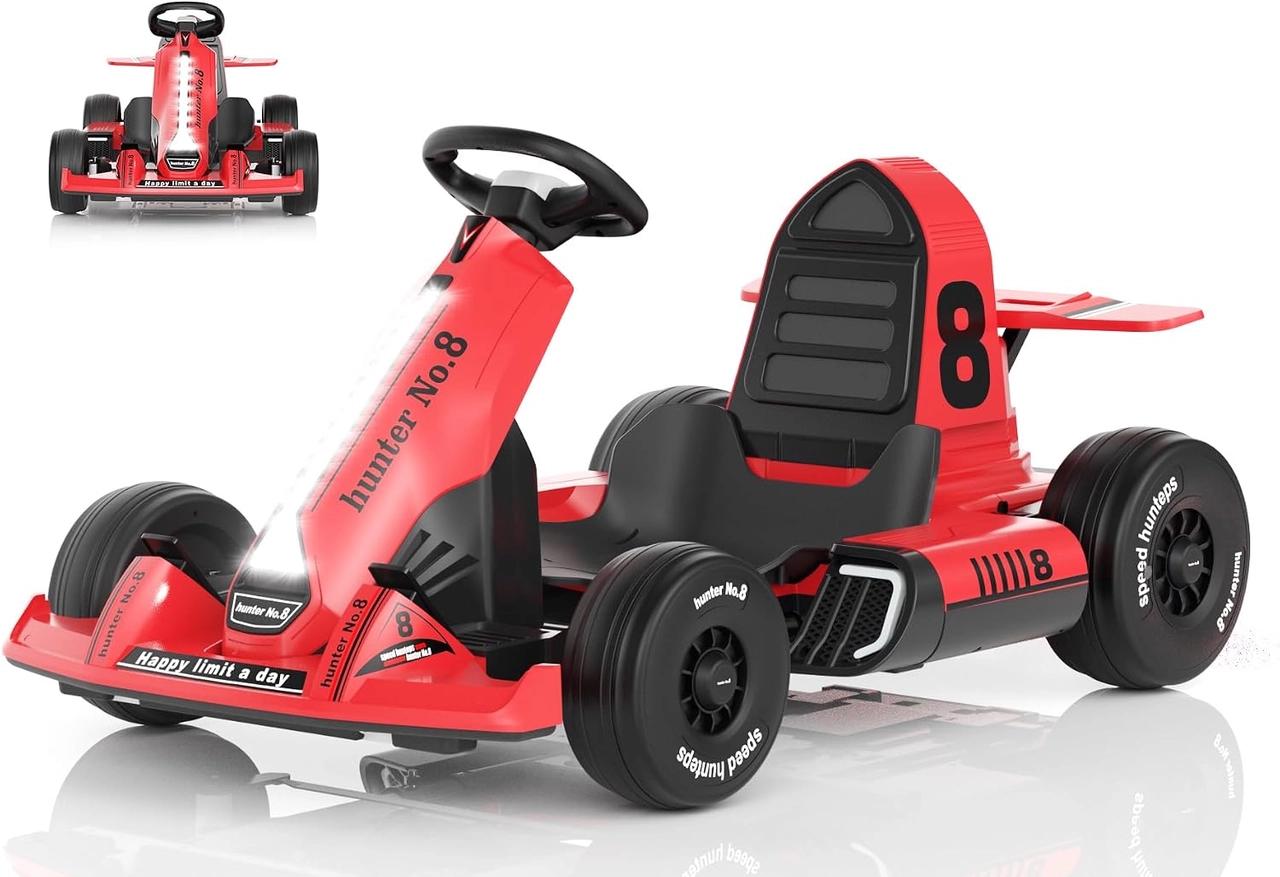
A red 24V XJD go kart is designed to feel energetic, but learning should remain structured. The child does not need a miniature race program. They need clear boundaries, repeatable controls and an adult who knows when to simplify or stop the session.
The XJD Electric Go Kart for Kids – Red 24V listing describes speed up to 7.5 mph, a 24V 7Ah battery, child pedal operation, a parent remote, Bluetooth/FM audio, lights, shock absorption and a 10 cm body adjustment. The practice plan below uses those listed features without assuming that every child in the stated age range is ready.
Stage zero: prove the setup is suitable
Assemble and inspect the kart according to the manual. With power off, confirm a stable seat position, comfortable pedal reach and controlled steering. Check the restraint and body adjustment lock. Read the operating limits and surface guidance for the exact model.
Then inspect the route. It should be dry, level, closed to traffic and separated from streets, water, steps, parked cars and steep slopes. Give the stopping area more room than you think a faster tier will need.
Stage one: command response
Teach three words: start, stop and wait. The child should repeat what each command means and demonstrate with the power off. If the child treats “stop” as a suggestion, postpone powered driving.
Test the parent remote before the rider enters. Know what each control does, remain within the operating guidance and stay physically close. The remote is a backup, not permission to supervise from a distance.
Stage two: straight-line control
Create a short straight lane with a start box and a visible stopping line. The first goal is to move smoothly and stop before the line. Repeat in both directions only if the route remains clear.
Watch the child's eyes, hands and posture. Looking down, gripping erratically or sliding forward suggests the task is too demanding or the fit needs attention. Stop and adjust rather than encouraging the child to “push through.”
Stage three: one broad turn
Add one large marker and ask the child to look around it. Wide turns teach planning without forcing abrupt steering. Keep the stopping line after the turn so every lap ends with the same familiar action.
If the child accelerates into the turn or turns the steering rapidly from side to side, return to a slower, straighter exercise. Skill progression should follow consistency.
Stage four: a simple loop
Use two or three markers to create a loop with generous spacing. Add a wait zone where the child must stop until the adult gives permission. This teaches that driving includes decisions, not just movement.
Keep spectators outside the route. Avoid racing another child during early practice because competition can replace the calm control you are trying to build.
Change only one part of the course at a time. When the stopping line, turn direction and audience all change together, it becomes difficult to tell whether the child has learned the skill or is simply reacting to a new situation.
Stage five: independent routine
When the child can complete the loop predictably, ask them to help recite the pre-drive checklist: route, wheels, steering, pedal area, seat, belt and battery condition. The adult remains responsible for the inspection, but participation develops useful habits.
Set music and other entertainment only while stopped. The listed lights do not make public-road or nighttime driving appropriate.
Know when to end a session
- Stop after a collision, unusual sound or change in control response.
- Stop when the rider ignores boundaries or appears tired.
- Stop when weather, lighting or pedestrian activity changes the route.
- Stop for battery damage, unusual heat, swelling, leaking or odor.
Progress should look calm
The red 24V XJD go kart can support a growing driver's practice when the child already has the fit and attention for its faster listed tier. Move from commands to straight stops, then wide turns and a simple loop. The strongest sign of progress is not a faster lap; it is a rider who stays composed and responds reliably.
Compare the other 24V color options
Compare this red 24V kids go kart with the black 24V kids go kart and white 24V kids go kart. Visit the Kids Go Kart collection, then read the black 24V readiness guide and white 24V care checklist.


